
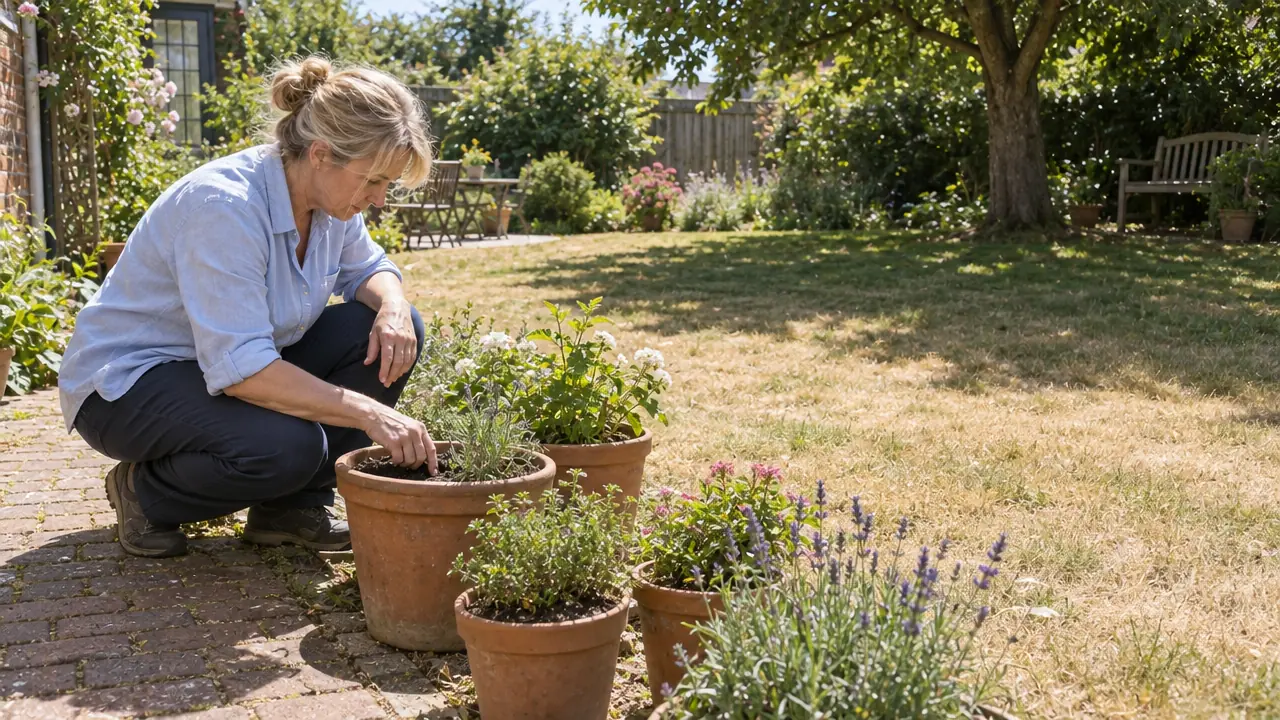
A heatwave can make familiar garden jobs seem urgent. Brown leaves invite pruning, a struggling plant looks as though it needs feeding, and dry-looking ground suggests watering everything at once. Yet work that helps in ordinary weather may put plants under more strain when heat and drought are already limiting their resources.
These nine mistakes bring together advice from gardeners, tree specialists and Royal Horticultural Society (RHS) water management expert Janet Manning. They are intended for a UK garden, where water shortages and local hosepipe restrictions may affect what you can do. Check the rules that apply to you before watering; careful use of water is not a way around a restriction. Above all, assess the plants and soil in front of you rather than following a routine regardless of conditions.
1. Cutting back leaves that look dead
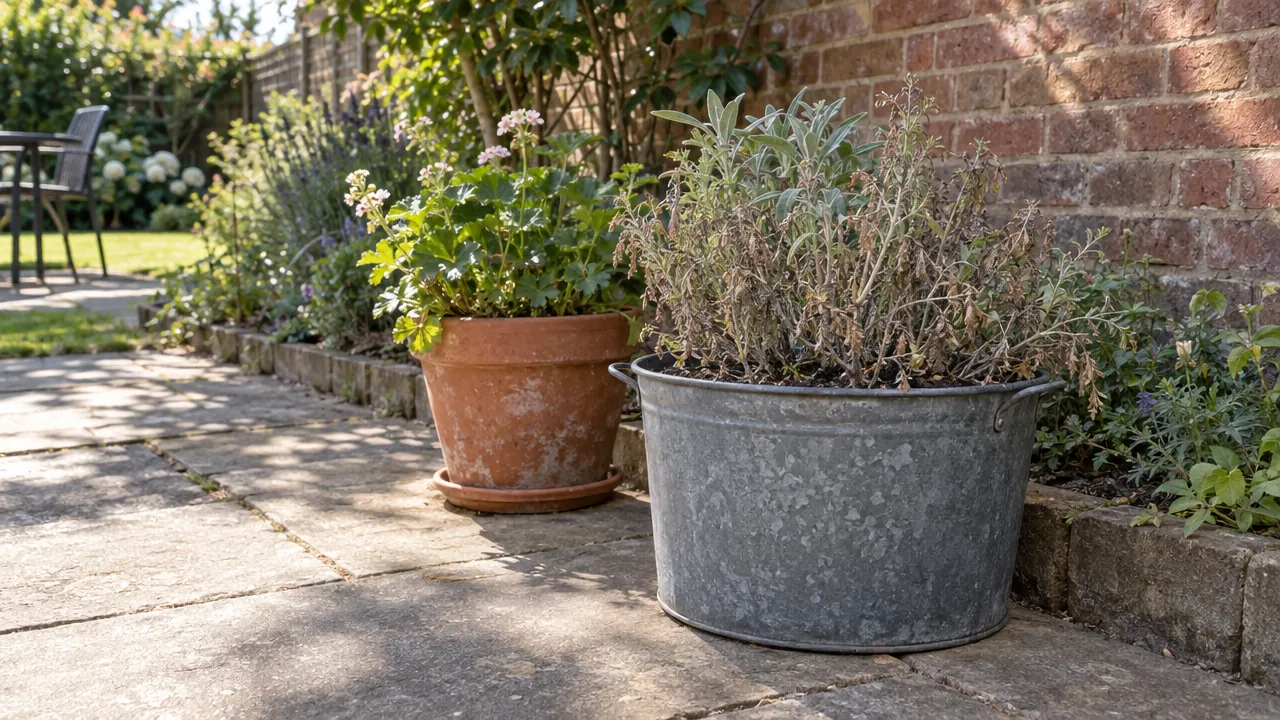
Crisp foliage does not always mean a plant has died. Some plants respond to extreme conditions, whether cold or hot and dry, by becoming dormant. Their leaves may die back while the roots survive on minimal resources. The appearance of the leaves alone cannot tell you whether the plant will recover when conditions improve.
Resist the urge to trim off damaged-looking growth immediately. Pruning can stimulate new growth, creating another demand on a plant already under stress. Check whether the soil needs water and, if watering is permitted, give a dry root area a thorough soak. Then wait until the weather has returned closer to normal before deciding what to remove. This pause gives you a better chance to distinguish temporary dieback from a plant that has not survived.
2. Watering to a fixed schedule
The same plant can be much drier on one day of a heatwave than on another, because temperatures and conditions vary. Giving every plant an identical amount of water on set days ignores those differences. Manning advises checking soil moisture first. A moisture meter, available from garden centres, is one way to help make that assessment; the point is to establish whether water is needed before using it.
Put water where it is needed
When a plant needs watering, direct water towards the soil around its roots and allow it to soak in. A light spray over a broad area may be less useful than watering the root area thoroughly, although a particular plant may have different requirements. Morning or evening watering can reduce evaporation. If another time is the only practical option, getting water into the soil still matters. Use only a watering method allowed under any restrictions in force locally.
Where water is limited, the main groups to check are vegetables, plants in containers, newly planted trees and newly planted shrubs. Recent plantings and pots may have less access to moisture than established plants growing in open ground. These are priorities for checking, not a reason to water without looking at the soil. Local restrictions still apply even when a plant appears to need attention.
3. Underestimating the needs of pots
Container plants can be more vulnerable to heat and drought than plants in the ground. Their roots are confined to the compost you provide, while roots in open soil may reach moisture deeper down. A pot that was watered recently can still need checking as the weather changes. Where possible, move vulnerable containers to a cooler, shady position until the heat eases.
- If the compost needs water, water thoroughly until it runs from the drainage holes. When compost has become bone dry, it may repel water. Standing the whole pot in a bucket or trough for a few hours, or until the compost feels heavy again, can help it absorb moisture.
- Group pots together to help shelter them from the heat and reduce evaporation. Metal and black plastic pots can heat up faster than terracotta or wood, so consider protecting them or moving them into shade.
- Check small pots regularly because they dry faster than larger ones. If needed, they can be soaked in a bath or tub. Hanging baskets can dry faster than pots too, but check their compost instead of assuming they must be watered every day.
Frequent watering can wash nutrients out of a hanging basket, so consider whether it also needs feeding. That is a question about the compost and the plant in that basket, not a general instruction to feed everything affected by the heat.
4. Feeding a stressed plant for a quick lift
Fertiliser is not a substitute for water. Harry Baldwin, formerly head gardener at Borde Hill Gardens, explains that feeding can stimulate growth and place further demands on a heat-stressed plant. Gardeners also caution that, in dry soil, a plant may not take up fertiliser and its roots could be damaged. Avoid treating a plant’s wilted appearance as an automatic signal to add feed.
Pots need separate consideration because their plants rely on the nutrients supplied in the container. If slow-release plant food is already in the compost, extra feeding may be unnecessary. The source advice is to continue an established weekly liquid seaweed feed rather than stop it solely because of the weather. Hanging baskets that need frequent watering are particularly worth checking for nutrient needs. Assess what is already in the pot before changing its usual feeding routine.
5. Assuming any mulch will help immediately
Mulching means laying organic matter on top of the soil without digging it in. It can help protect soil from drying, but the material and the timing both matter. For hot weather, Manning suggests a chunky material such as bark, straw or woodchip. The spaces between pieces can allow rain to reach the soil underneath.
She recommends applying finer mulches, including garden compost, in autumn or spring instead. In hot, dry conditions, a fine surface layer may absorb water that then evaporates before it reaches the soil below. This does not make compost unsuitable for mulching at other times; it explains why spreading it during a drought may not have the intended effect.
6. Assuming a dead branch means a dead tree
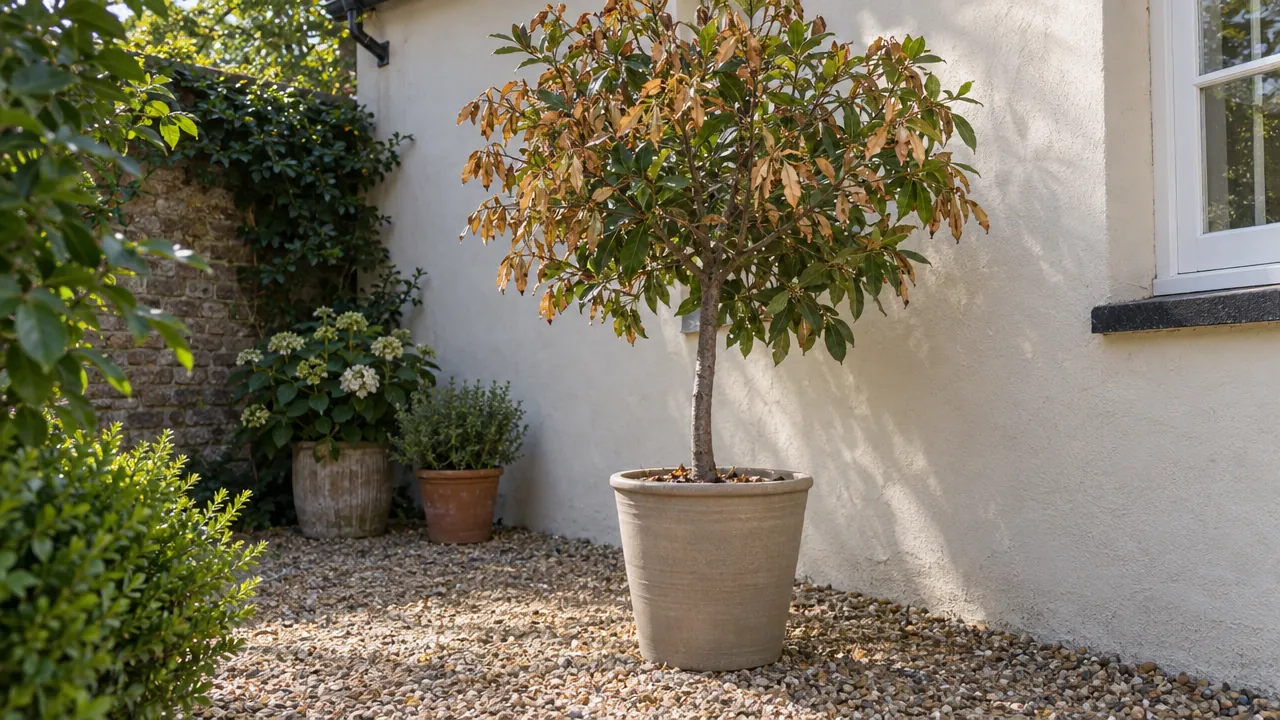
One or two dead or dying branches do not necessarily mean the whole tree is dying, according to tree grower Miles Hayward. He explains that drought can damage roots, and a subsequent wet, muddy winter may add to that damage. A tree may lose some branches as it adjusts. Look at its wider condition rather than drawing a conclusion from one branch alone.
Safety comes first if a branch could fall and injure someone: consult a tree surgeon. An arboriculturalist can also advise if you are concerned about the tree’s condition. Otherwise, wait until the appropriate time for pruning that tree before removing dead wood. If you mulch around it, keep the material back from the trunk, where a build-up could encourage rot.
Young trees are among the plantings to check for water. The source suggests around two buckets once a week as a guide, allowing the water to soak in slowly rather than splashing it onto the surface. A slow-release watering bag is another way to deliver it. Adjust the amount and timing to conditions, the tree’s needs and any local water restrictions.
7. Overlooking shade
Shade can provide relief for vulnerable container plants, so moving pots is a useful short-term response when space allows. For a longer-term change, consider whether adding trees could provide shade in the garden. In countries where intense heat is more frequent, some gardeners use shade sails to shelter plants. Shade does not remove the need to check soil moisture, but it changes the conditions in which a plant is growing.
The time of day matters too. Morning sun followed by afternoon shade is gentler than morning shade followed by afternoon sun. Shade is not a single growing condition: gardeners distinguish six types, and plants can be chosen for each. Bear that variation in mind both when finding temporary shelter for a pot and when planning what to grow in a shaded space.
8. Planting or moving plants during the heat
A heatwave is not the moment to fill every gap in a border. Planting something new or moving an established plant adds to the stress it faces in hot, dry weather. If you acquire a plant, keep it in its pot in the shadiest suitable place, monitor its need for water and wait until autumn to plant it out.
Likewise, a plant that appears to be in the wrong position can usually wait until autumn to be moved. Water it if needed and permitted in the meantime. When choosing plants later, consider the range of conditions they will face: UK gardens may experience hot, dry summers as well as wet winters. A plant suited only to the conditions on the day you choose it may be less well matched to the site across the year.
9. Mowing too short or feeding a dry lawn
A lawn may turn brown in drought and recover when rain returns. Brown colour on its own is therefore not a reason to fertilise during a heatwave. Wait for rain and cooler weather before feeding a drought-stressed lawn. If lawn watering is permitted, a thorough watering once or twice a week is suggested in the source rather than a brief daily sprinkler session. Check local rules before using a hosepipe or sprinkler.
Avoid mowing the grass too short, as slightly longer grass helps shade its roots. Growth may slow or stop during drought while an occasional shoot of yarrow or another plant still stands above the lawn. Those isolated shoots can be snipped off without cutting all the grass closely.
For now, concentrate on checking moisture, watering where it is needed and allowed, and giving vulnerable pots some shade. Jobs such as moving plants, routine feeding and pruning damaged-looking growth can often wait for cooler weather. Longer term, more shade, resilient planting or an area planned for drier conditions may be worth considering alongside the possibility of wet winters.