
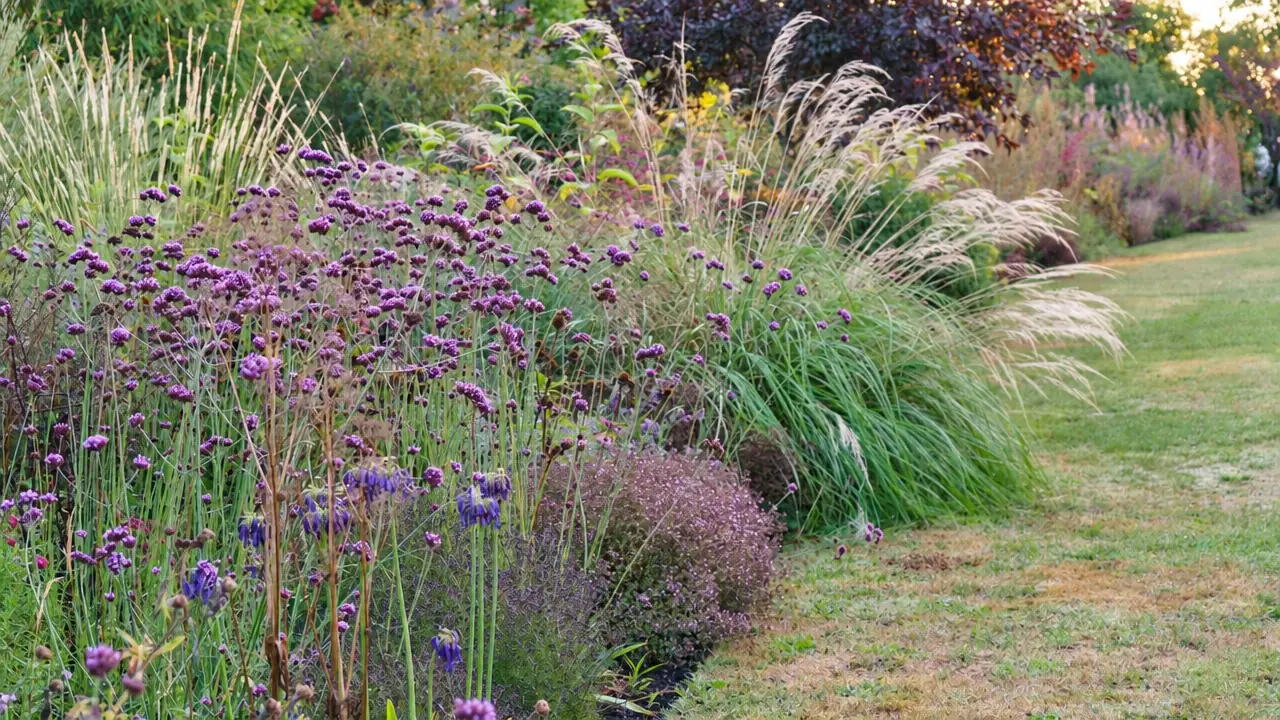
An exceptionally wet British winter followed by a hot, dry summer tests a garden in two different ways. Steve Edney and Lou Dowle of No Name Nursery experienced heavy rain in January and February, then heatwaves and 58 days without rain. Their established Long Border still looked good after two watering sessions during the dry season. That is a result from one garden, not a watering target for others, but it shows why resilience involves more than choosing plants labelled drought tolerant.
Their observations bring together plant choice, position, shade, planting technique and soil care. In an established garden, looking at where plants struggled can be more useful than replacing an entire border. The aim is to understand both extremes: which places dry out fastest in summer, and which leave roots or crowns wet for long periods in winter. Changes to an existing planting scheme can then be considered in response to what happened there, rather than to a general list of supposedly resilient plants.
Plan for both wet and dry conditions
Mediterranean-style planting may seem an obvious response to hotter, drier summers. Yet plants that enjoy dry conditions can suffer if water remains around their roots through a wet winter. For Steve and Lou, the sequence mattered: the prolonged summer drought followed exceptionally heavy winter rainfall. Selecting only for heat and drought would address one part of the problem while potentially overlooking another. A plant's performance in the summer therefore needs to be considered alongside its response to the preceding winter.
Steve has been impressed by North American prairie plants from regions with long dry summer periods. Their origins make them worth considering, but do not establish that every prairie plant will suit a particular British border. Winter wetness and the conditions around each plant still matter. Nor does an origin associated with heat guarantee a good result in every garden. The question is not simply whether a plant comes from somewhere dry, but whether it copes with the combination of conditions it will encounter.
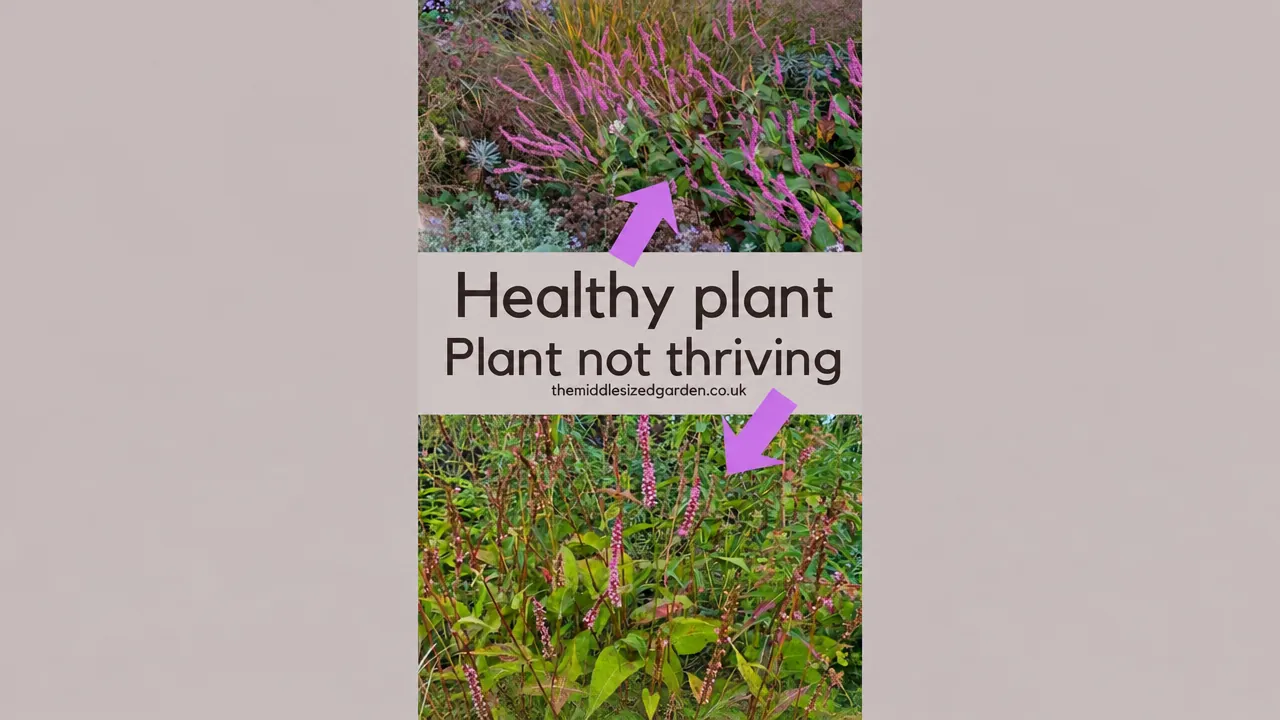
For example, Steve and Lou expected their perennial chocolate cosmos to tolerate heat because of its Mexican origins. Despite being mulched, it developed mildew, remained stunted and looked poor. Their Persicaria ‘Pink Elephant’ survived, but repeatedly had scorched leaf edges and an untidy appearance through three successive years of dry spells. They eventually removed it. These experiences are reasons to examine how individual plants perform, rather than conclusions about every member of either group.
Check the cultivar as well as the plant group
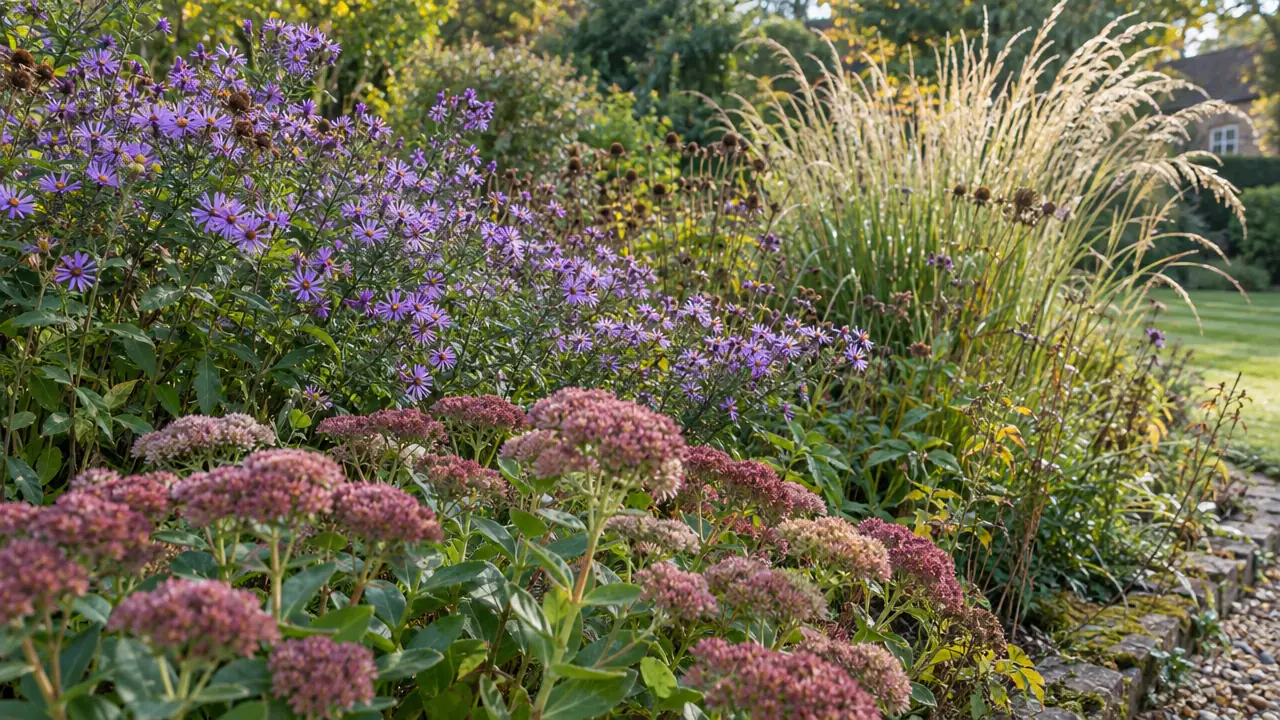
A broad description such as “lavender is drought tolerant” can hide differences between named selections. Steve and Lou noticed this among their asters, some of which are now placed under botanical names including Symphyotrichum and Erybia. One cultivar became brown and crisp, while others in the same garden remained fresh. Steve also cautions against rejecting all Persicarias because ‘Pink Elephant’ struggled: other cultivars performed much better for them. The source writer likewise reported removing persicarias after difficult summers in her own garden, an account of another site rather than a verdict on the whole group.
A cultivar is a plant selected or bred for particular characteristics. These may include flower colour, a more compact shape or a longer flowering period; breeding can also affect disease resistance. Names such as Aster ‘King George’, Aster ‘Purple Dome’ and Rose ‘Lady of Shalott’ identify particular selections. A plant-group name alone may therefore be too broad to guide a decision about resilience. Keeping the full name where possible makes it easier to distinguish an individual selection's results from those of its relatives.
When reviewing a border, record the exact name of a struggling plant if it is known. Compare it with named cultivars growing nearby, as well as with plants of the same group in other positions. A specialist grower may be able to describe how a cultivar has performed, although that account cannot substitute for observing the exposure and soil in your own garden. The contrast between selections is especially useful when one plant fails but its neighbours do not.
Consider position and neighbouring plants
Steve and Lou have two useful settings for comparison. Their decorative Long Border is 100 metres long and six metres deep, with different plants growing together. They also have stock beds containing groups of plants, and grow most of their nursery plants directly in the soil rather than relying on bought-in pot-grown stock. The mixed, layered border offered conditions unlike those of the more exposed stock beds. That distinction provides context for their results: the plants were not simply standing in identical positions with different labels.
The Sanguisorbas in the stock beds looked dreadful in the dry weather. Steve initially thought the plants had performed badly as a group, but Lou noticed that those in the Long Border were doing well. In that border, they grew several metres back from the edge. Other plants shaded their roots and lower leaves, while the Sanguisorbas' flowers rose above the surrounding planting. In the stock beds, sun reached the soil around the plants much more directly.
The contrast was not explained by more frequent watering: the stock beds were watered four times during the summer, while the Long Border was watered twice. Steve believes position and the shelter of neighbouring plants made a substantial difference. Some plants took the strongest sun while others grew with cooler, shaded soil. This is a useful way to assess mixed planting, beyond how combinations look, but it is an observation from their garden rather than proof that close planting always reduces water needs.
Before deciding that a plant is unsuitable, it is worth noting whether it stands in open ground or among taller neighbours. In this example, the difference emerged only when the same kind of plant was compared across two growing areas. Watering records alone would have suggested that the stock beds had received more help, without explaining why their Sanguisorbas looked worse. Looking at the soil surface and the height of surrounding plants adds information that a plant name cannot provide.
Review the front of the border
The front of Steve and Lou's border was particularly exposed. Their chocolate cosmos struggled there, while the Sanguisorbas farther back benefited from surrounding growth. When damage appears uneven after hot weather, position may help explain the pattern. Plants along the edge do not necessarily experience the shelter available only a few metres behind them. In their border, this made the front a sensible place to examine before treating every struggling plant as evidence of a wider failure.
Some plants nevertheless performed well at that exposed front. They included the oreganos ‘Herrenhausen’, ‘Bristol Cross’ and ‘Rosenkuppel’, compact pampas grass and Verbena bonariensis. Their performance does not promise the same result elsewhere. It suggests a limited first change in a similar border: reassess the plants nearest the exposed edge before deciding to replant everything.
Use shade where it fits
During the drought, Steve and Lou noticed that the last areas of grass to remain green were on the shady sides of trees and hedges. Shade appeared to protect the ground from intense heat. The source writer also saw less heat and drought damage on the shady side of her own garden. Trees and hedges compete with nearby planting for water and nutrients, however, so their effects need to be considered together. A shaded patch is not automatically an easier place for every plant to grow.
Where a garden has room for a tree, Steve suggests finer foliage for small and medium-sized spaces. It can create dappled shade over planting beneath, whereas a tree with very large, broad leaves may cast deeper shade. Lou points to crab apples for their spring flowers, fruit and autumn colour; those at the nursery also performed well through the difficult weather. Their experience is a reason to consider them, not a guarantee for every site. The type of shade matters if the intention is to keep growing a range of plants underneath.
Shade can be temporary, too. Lou used netting over salad crops and says it cut out almost 70% of the sunlight; the crops did not bolt. The figure describes her setup, not a standard outcome for all netting. Net-covered cloches may also be less suitable visually among ornamental flowers. The example illustrates a different option for crops without assuming that every part of a garden needs permanent shade.
Allow time for plants to establish
“Drought tolerant once established” does not mean that a newly planted specimen can immediately cope without water. Its roots have not yet developed to their eventual extent in the surrounding soil. A mature example growing nearby is therefore not a reliable guide to how little attention a new plant needs, particularly if the border is already dry when planting takes place. The qualification “once established” is as important as the claim of drought tolerance.
From his experience, Steve uses around three years as a guide for many perennials to reach their maximum performance and root growth. He estimates about five years for shrubs and seven for trees. These are approximate times, with exceptions, rather than deadlines that apply to every plant. They put the phrase “once established” into perspective without determining a fixed watering schedule.
Wet the planting hole and rootball
Steve and Lou pay particular attention to water when a plant first goes into the ground. Their method is to water the planting hole two or three times, allowing the water to soak in before planting. They also immerse the plant in a tub or bucket until its rootball is thoroughly wet. They then put it in place, backfill with soil and compost, water again and cover the surface with mulch. The repeated watering at planting is intended to reach deeper than a quick wetting of the soil surface.
Steve demonstrated the importance of reaching the rootball during a dry April planting exercise. A student applied five litres of water, about half a watering can. Although it appeared generous, when the plant was lifted a minute later the water had not reached the bottom of the rootball. A wet-looking surface had concealed a dry area where the new plant needed moisture.
This is their planting practice in dry conditions, not a universal quantity of water or a promise that one thorough session will remove the need to water again. The distinction to keep in mind is between wetting the surface and wetting the planting area and rootball. What happens afterwards still depends on the plant, its stage of establishment and the conditions around it.
Watch plants before deciding when to water
After planting, Steve and Lou do not automatically water the Long Border whenever the weather turns dry. They observe the plants and respond when they see signs that intervention is needed. In the summer described, they watered it once in April and once in late June; the stock beds received four sessions. Those figures describe an established garden in a particular season, not a schedule for other borders. Their approach depends on noticing changes in plants rather than following the same routine regardless of conditions.
Nor did they leave plants indefinitely without water. Steve and Lou say they avoid going longer than about six weeks without watering. During the 58-day period without rain, they chose a cooler interval between heatwaves to water before the next spell of extreme heat. Their decision combined what they saw in the garden with the weather conditions; counting dry days was not their only consideration.
Steve has also noticed a difference between wet and dry springs. In a wet spring, readily available moisture and nutrients can encourage abundant top growth. If summer then becomes very dry, that amount of growth may be harder for a plant to sustain. A dry spring may check growth earlier, leaving some plants better able to cope later because they have not grown as vigorously. This is his observation, not a reason to deny water to a plant that needs it.
Wilting is not always the first visible sign of water stress. Changes in leaf colour, fewer or smaller flowers and scorched-looking leaf edges may appear earlier. Looking regularly at individual plants helps make those changes easier to recognise. Someone still learning the signs may find a moisture meter useful for checking soil moisture alongside observing the plant. No single symptom, on its own, establishes exactly what every plant needs. Comparing its appearance over time is more informative than waiting for a dramatic change.
The Long Border and stock beds show why a count of watering sessions can be misleading without context. The stock beds received more water but their exposed Sanguisorbas still looked worse. Equally, the border's two sessions should not be taken as evidence that newly planted or more exposed gardens can be treated the same way. Monitoring is a continuing task, rather than a rule to water as little as possible.
Protect exposed soil
Steve has gardened professionally for more than 30 years. He recalls that 20 years ago they did not routinely mulch everything, concentrating instead on particularly tender plants. His practice has changed through dealing with very dry and very wet conditions. He now gives more attention to protecting and improving the soil, including covering exposed ground to reduce drying in the sun. This shift reflects his experience at the nursery rather than a rule that every garden needs the same treatment.
In his use of the term, mulch is not limited to bark, well-rotted manure or garden compost. He also mentions green-waste compost, grit, gravel, stone and grass clippings. These examples are not interchangeable prescriptions for every soil or plant. The material and its placement matter, especially where moisture held against a vulnerable crown could cause problems.
Grass clippings will eventually break down and return nutrients to the soil. Steve advises using them in a fine layer instead of leaving thick clumps on the border. He also avoids allowing them to build up around plant crowns, where rot could result. His broader aim is to cover exposed soil while still paying attention to the conditions immediately around each plant. In other words, covering bare ground should not mean burying the crown under a damp heap.
Mulching in this account serves more than one purpose, but its effects should not be treated as identical in every position. Organic materials such as clippings and compost break down; grit and stone are different kinds of covering. Steve's change in practice reflects what he has found useful in his own growing conditions, rather than a requirement to cover every border in the same material.
Consider storing rainwater
Heavy rainfall followed by a prolonged dry period also raises a question about storage. Steve and Lou consider a single water butt limited as a reserve through a long drought. Where space and a project allow, directing rainwater into larger tanks could provide a more useful amount for later watering. Storage complements decisions about planting and soil care; it does not change which positions are exposed or which plants are vulnerable to winter wet. The scale of storage they discuss ranges from changes made during landscaping to simple measures among vegetables.
For a landscaping project still at the planning stage, Lou suggests considering large above-ground tanks or underground tanks beneath driveways. These are capacity options, not prerequisites for improving an existing border. At a smaller scale, she has cut the bottoms from plastic bottles and placed them beside courgettes and squash in the vegetable garden so water can be directed towards the bases of those plants.
Pay attention to winter-wet crowns
Steve and Lou garden on silty soil with a relatively high water table, so winter wetness is a significant issue for them. A plant that does well in summer drought may still struggle when its crown remains wet during weeks of rain. For some susceptible plants, they use about 10cm of horticultural grit as a surface topping directly around the base. They may also plant on a slight mound rather than in a hollow. Both choices relate to the wet conditions they encounter, rather than to summer drought alone.
Their aim is to reduce wetness around the vulnerable crown in winter. Steve also uses the grit topping to limit surface drying in summer. This describes how they manage particular plants on their site, not a general instruction to surround every plant with grit. The reason for using it is tied to the plant's sensitivity and the wet conditions they encounter.
Steve specifically warns against digging a hole in clay soil and filling it with grit. Water can move into that grit-filled space and collect there. His approach is a topping at the surface around susceptible plants, not a pocket of grit below them. That distinction matters when assessing a proposed response to winter wet: a material placed at the crown is not doing the same job as one put into the planting hole.
Plants that stood out in their garden
The nursery's results offer plants to investigate, not a list guaranteed to succeed elsewhere. Lou highlights Hylotelephiums, formerly known as Sedums. Their plants coped with the wet winter and still looked good after the dry summer; cultivars mentioned include ‘Matrona’ and ‘Purple Emperor’. They also noted an evergreen grass from Argentina, related to pampas grass, with arching foliage and soft seedheads. The account does not give a cultivar name for that grass. Its appearance and origin are useful details, but not a basis for assigning it an unreported name.
Several Origanums performed well, attracted bees and retained interest in their seedheads afterwards. The oreganos ‘Herrenhausen’, ‘Bristol Cross’ and ‘Rosenkuppel’ were among those doing well at the front of the Long Border. That detail is useful because their performance was observed in an exposed position, rather than inferred from a general description of the plants.
Steve is particularly interested in Baptisia. These North American plants have deep roots and silvery foliage, flower around the same time as lupins in May and June, and are available in a range of colours. He considers them a possible alternative for gardeners who like the cottage-garden appearance of lupins but have difficulty growing them. He is chairing an RHS trial of Baptisias; at the time of the account, neither its trial plants nor the nursery's stock had been watered that year. That is a report about those plants in that season, not a general watering rule for Baptisia.
Roses were a surprise
Lou was surprised by how well the nursery's roses performed. Their foliage stayed clean without blackspot, and repeat-flowering varieties continued to flower. Steve and Lou described it as an exceptional year for roses in their garden. The source writer had heard similar reports from other gardeners that year, but those impressions do not establish that roses as a group will reliably tolerate either a prolonged drought or a wet winter in other gardens.
Review the garden before replanting
The Sanguisorbas comparison shows that a plant can do well in one position and struggle in another within the same nursery. Cultivar differences add another reason to look closely, while success in a dry summer says little by itself about tolerance of winter wet. An initial review can identify exposed border edges, places sheltered by neighbouring plants or trees, and spots where water remains around vulnerable crowns. Noting which plants thrived in each position also helps distinguish a difficult site from an individual plant that performed poorly.
Changes can then be proportionate to what the garden shows. A struggling plant at the front of a border need not mean the whole border must go. Dappled shade or suitable soil cover may help in some places; a newly planted specimen needs water to reach its rootball, followed by observation and watering when needed. Rainwater storage is another consideration where it fits. Steve and Lou's experience offers no single recipe, but it makes a case for assessing an established garden through both its wettest and driest periods.