
The first autumn frost does not arrive on the same date everywhere in the UK. Check your local forecast as temperatures fall, rather than working to a fixed deadline. A forecast frost is a prompt to look at tender crops, herbs and houseplants that spent summer outdoors. It is also a useful time to check hoses, clay pots and fallen leaves. Not every job must be finished before the first frost: what matters depends on your plants, whether you hope to extend the harvest and how cold the weather is likely to become.
Frost and freezing weather
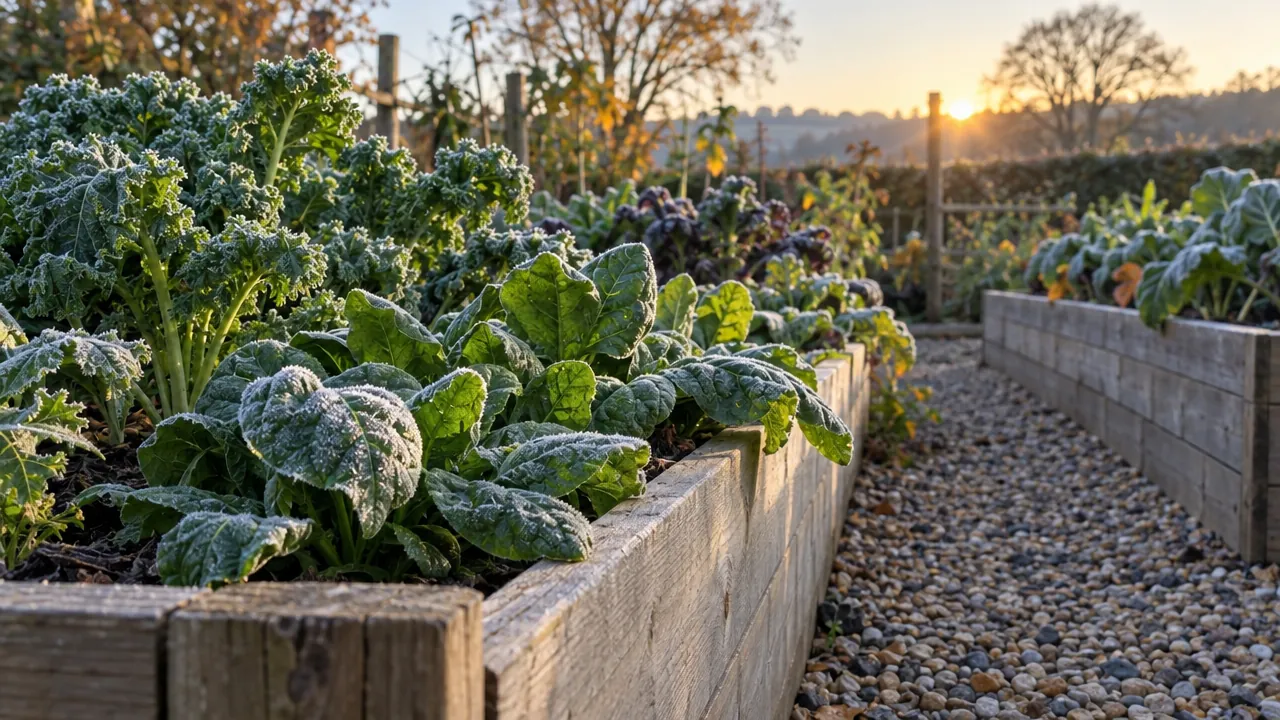
A ground frost can form when the temperature at ground level falls to around 0°C, leaving a thin layer of ice on exposed surfaces. It can happen even when the air temperature measured above the ground remains above 0°C. Frost may damage plant tissue, but the effect depends on the plant and the conditions. Tender growth is more vulnerable than crops that tolerate some cold.
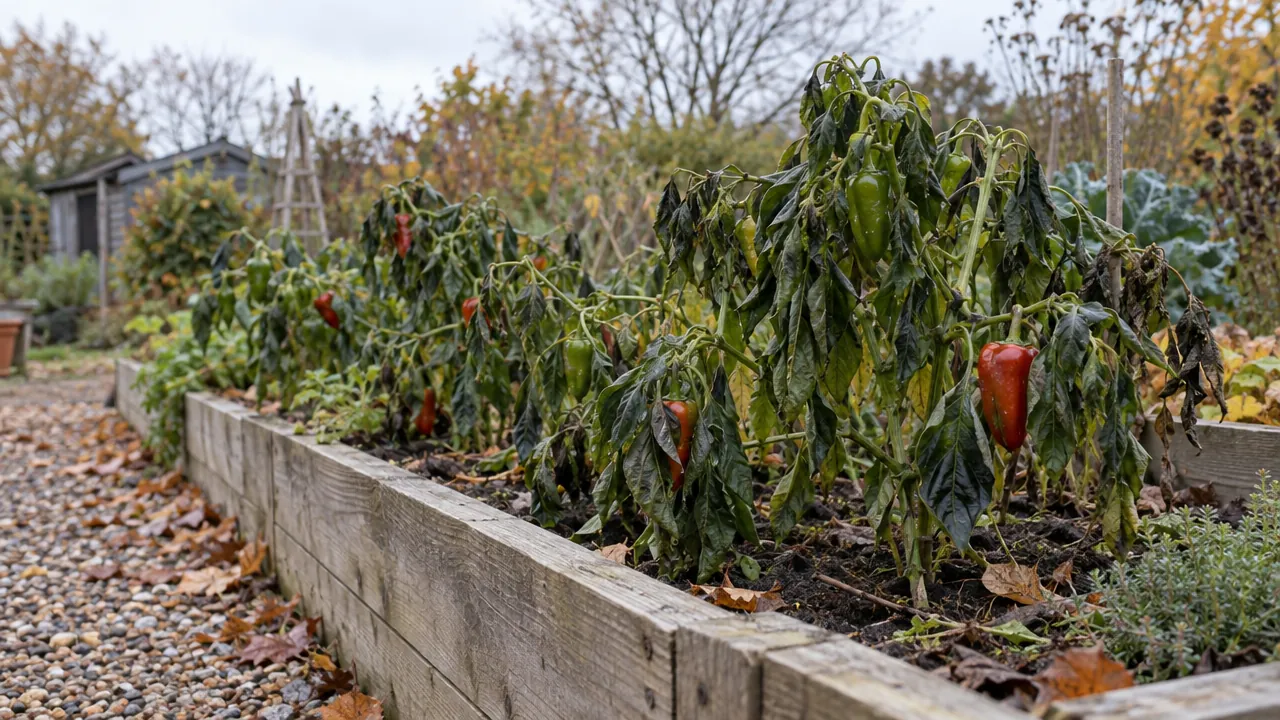
When the air temperature itself falls below 0°C, a freeze may cause more extensive damage to tender plants, particularly those left without protection. The first ground frost is not necessarily the end of every crop, nor does it establish a reliable date for the next colder spell. Keep checking the forecast after it passes. That distinction helps you decide whether to cover a plant for a frosty night, harvest it or leave a hardier crop growing while watching for sustained freezing weather.
Protect or harvest vegetables
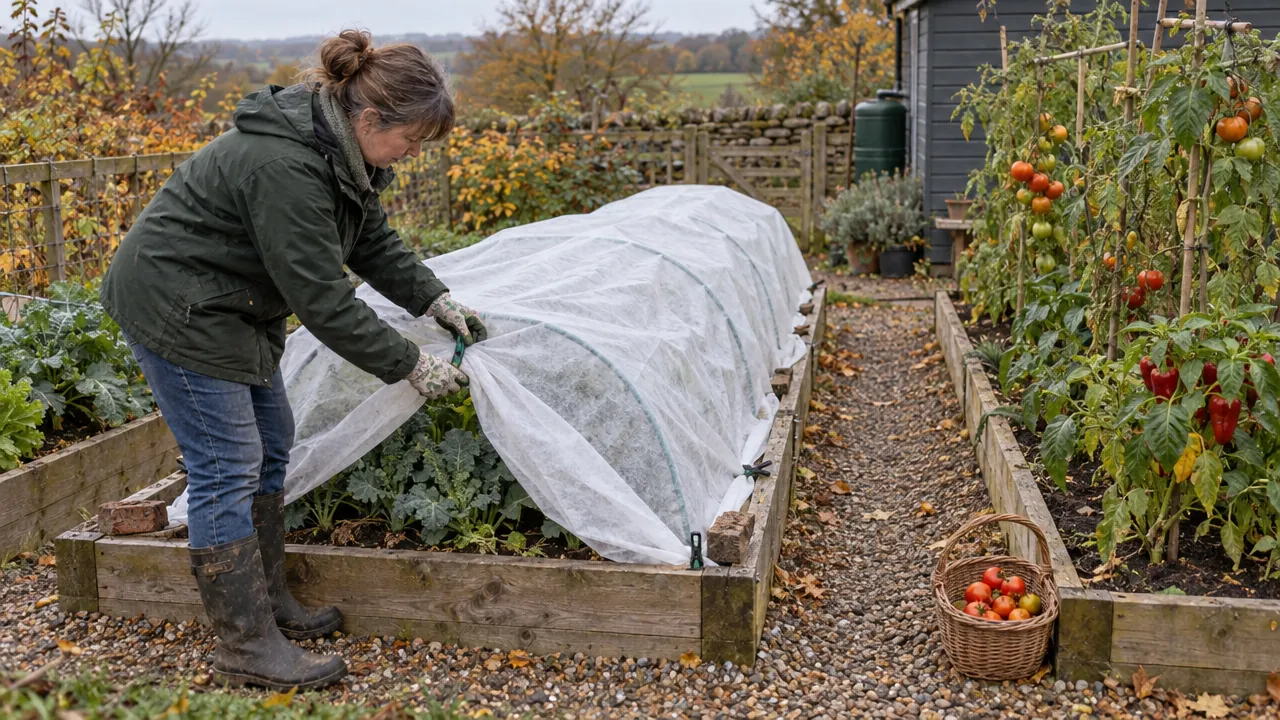
If you want tender, warm-season vegetables to keep growing, covering them when frost is forecast may give them more time. Use fabric rather than plastic: heavyweight frost cloth can cover rows or raised beds, while sheets or towels can serve as temporary covers. Fabric helps retain warmth rising from the ground overnight. Put covers in place before evening dew falls, then remove them in the morning once the sun is up. Protection is an option, not a guarantee against colder weather.
If you do not intend to extend the growing season, focus instead on the final harvest. The tender crops to check include:
- Tomatoes and peppers
- Aubergines
- Cucumbers and summer squash
- Melons
- Beans
Consider picking these before a forecast frost, or covering plants you want to keep growing. Green tomatoes can be brought indoors to ripen. You do not need to clear away spent plants at the same time as you harvest; that work can wait until later in autumn or, where appropriate, spring. Separating the harvest from the tidy-up lets you concentrate on fruit and vegetables that might otherwise be damaged.
Autumn-grown lettuce, spinach, kale and mâche, also called corn salad, may withstand light frosts. Brussels sprouts and broccoli are hardier too, but their response to freezing conditions varies. Check the forecast and consider covering or harvesting these crops if a sustained freeze is expected. There is no single frost date at which all of them must be picked.
Check winter squash and pumpkins as well. Harvest mature fruit before freezing conditions and allow it to cure in a suitable sheltered place. The plants themselves can be cleared later. As with other crops, let the local forecast guide the timing rather than assuming the first frost will arrive on a particular date.
Deal with tender herbs
Basil deserves an early check because it is tender: its leaves may blacken at temperatures just below 4°C, well above freezing. If you want to keep the harvest for later, pick it before a forecast frost. Basil or pesto can be frozen, while other herbs you want to save may be harvested and dried. Herbs differ in their tolerance of cold, so consider the species and its growing conditions rather than treating them all alike.
In colder areas, potted rosemary, lemongrass and bay may need to come indoors for winter. Potted rosemary can be kept in a sunny indoor position and returned outside when the risk of frost has passed. Coriander and dill may tolerate a light frost, but they are usually grown as annual herbs and can be sown again the following spring. Herbs that grow as perennials locally may also withstand a light frost, though that does not mean every perennial will keep producing through a freeze.
For tender annual herbs, harvest the leaves you want before frost is forecast. If winter access to cooking herbs matters to you, consider a small bed near the kitchen door for a future season. In autumn, bendable garden stakes can support a low hoop cover, with heavyweight frost cloth placed over it when needed. Depending on the weather, such a cover may extend the period when thyme or sage can be picked, but it cannot establish a fixed winter-harvest timetable.
Bring summering houseplants indoors
Houseplants that spent summer outside may need attention before frost is imminent. For tender plants, consider bringing them in when overnight temperatures regularly approach 13°C rather than waiting for a night below 0°C. Flowering plants such as orchids and Christmas cactus are among those to check. Watch the overnight forecast over a run of days as nights steadily cool.
Inspect plants for signs of pests before returning them to their usual indoor positions. A quick rinse in the shower and a couple of weeks kept apart from other houseplants give you an opportunity to check them again. This task has a different trigger from protecting vegetable beds: the suggested temperature for moving tender houseplants indoors is considerably higher than the temperature at which ground frost forms.
Plan autumn planting
Garlic, shallots and autumn-planted onion sets can go into the ground in autumn, but they do not necessarily have to be planted before the first frost. Aim to plant while the soil is workable so they have time to begin rooting before prolonged cold weather. Use local conditions and the forecast to judge the opportunity rather than assuming a predicted first-frost date is a planting deadline.
For an overwintering crop of spinach, choose a hardy winter variety and sow it early enough to establish before colder weather arrives. Established plants may become dormant during winter and resume growth as conditions warm in spring. Depending on the winter, there may be leaves ready to pick in spring. This is a possibility to plan for, not a harvest date that can be promised across different gardens or seasons.
Perennial vegetables such as rhubarb can also be planted in autumn where conditions allow. As with the alliums, workable soil and time for roots to establish matter more than getting the job done on a particular day before the first frost. If conditions are already unsuitable, the calendar alone is not a reason to force an autumn planting.
Drain hoses and check outdoor taps
Where winter freezing is likely, disconnect hoses from outdoor taps before cold weather, drain them, coil them and store them under cover. Water left in an attached hose can freeze and may contribute to pipe damage, including inside a wall. This can be a concern even where the outdoor tap is described as frost-free, so the hose should not be left connected simply because the tap has that feature.
A frost-free tap, sometimes called a frost bib, is designed to shut off water farther inside the warmer wall rather than at the exposed outer end. An attached hose can hold water and interfere with that protection. For an outdoor tap that is not frost-free, close the indoor shutoff valve if one is fitted, then open the outdoor tap to drain it. The aim is to remove water that might otherwise remain exposed to freezing conditions.
If your garden has dripline irrigation or hose timers, bring those in for winter where applicable. Inspect the dripline at the same time to see whether it needs repairs or replacement parts. Checking this equipment alongside the hoses may reveal work needed before the watering system is used again.
Shelter clay pots
Water expands by about 9% when it freezes. Porous terracotta and other clay pots can absorb water, making repeated freezing and thawing a concern. The glaze may develop fine cracks, known as crazing, and the pot itself may crack or break. Where possible, move clay pots to a sheltered, frost-free storage space before they are exposed to repeated freeze-thaw cycles.
Some planted pots must remain outdoors. In that case, a sheltered, south-facing position may reduce exposure, and a place close to a house wall may offer additional shelter. Neither position makes a pot frost-free, so treat it as a way to limit exposure when moving the container into storage is not possible. Check the likely weather when deciding which pots need attention first.
Manage fallen leaves
Fallen leaves do not all need to be removed from a garden. Leaving some in place can provide shelter for overwintering insects. Paths and pavements are a different matter: wet leaves can make walking surfaces slippery, so clear those areas as leaves accumulate. This lets you keep leaf cover where it is useful without leaving it where people need secure footing.
On a lawn, a very thick layer can become heavy in wet weather and may damage the grass. Mowing over those leaves chops them into smaller pieces that break down faster while leaving some material that can shelter insects. Another use for collected leaves is to turn them into leaf mould, which can be added to garden soil. The aim is not a completely bare garden, but a balance between safe paths, the condition of the lawn and places for leaves to remain.