
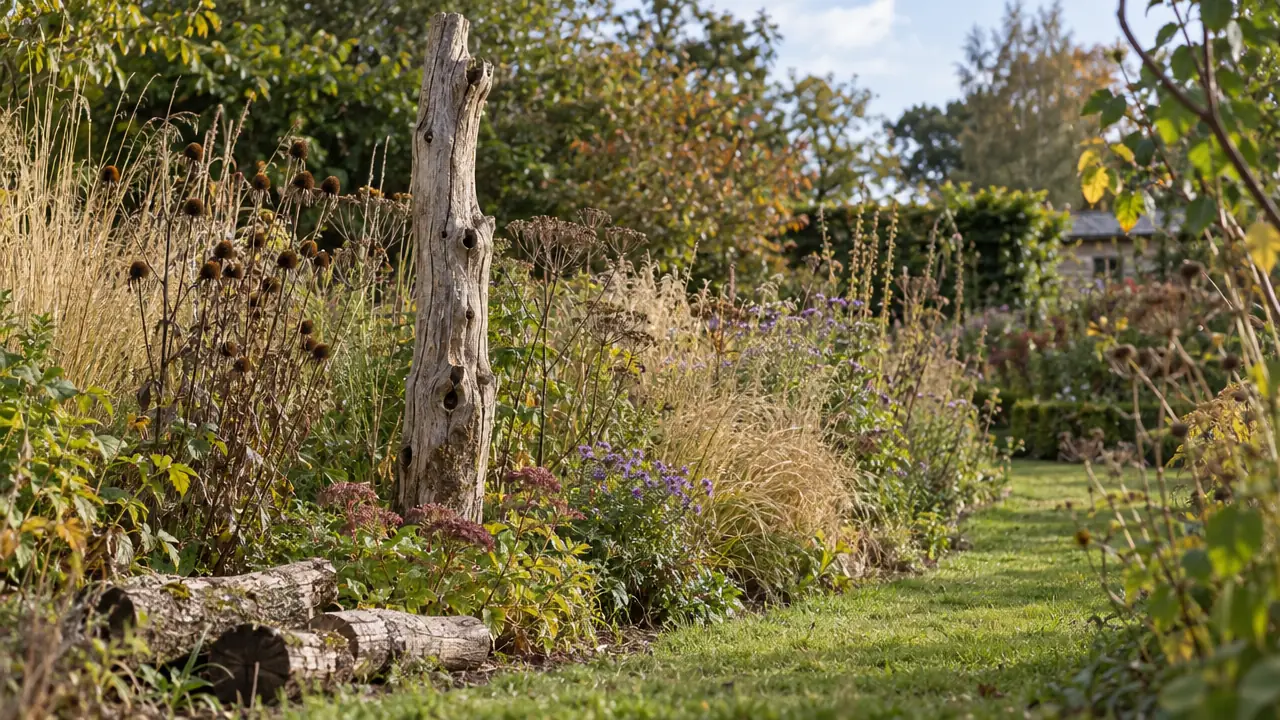
A fallen branch, a heap of prunings and paving slabs left by an old path may look like materials to clear away. They could also have a place in the garden: logs can define a border, branches can form an edge, and slabs can create gaps for planting. The first decision is not how to keep everything, but which pieces have a useful role and where they might fit.
Garden reuse is not a rule that every scrap must stay. John Little suggests pausing before removing material and looking for purposes it could serve. Decaying organic matter can contribute to soil, while timber, stems and gaps between stones can offer wildlife shelter. Arranged with care, retained materials can also give a garden structure rather than looking like an unfinished clear-out.
Little applies this approach to larger sites as well as gardens. Ecologists he works with value the mixture of decomposing wood and rubble on some brownfield sites for the range of habitats it can provide. He works with councils and planners to consider reuse on site. That is not an argument for retaining every item, either on a brownfield site or in a small garden: the question is what each place can accommodate.
Assess materials before clearing
Garden work often follows a costly cycle. Leaves, branches, old paving and rubble are taken away, sometimes for a disposal fee; soil improver, wood chip, edging or new paving is then brought in. Reuse may avoid part of that expense, but sorting and positioning what remains takes time. A structure made from salvaged pieces may still require paid labour. Begin with the intended layout and ask what existing materials could do within it.
Check whether any of the following could serve a specific purpose, rather than assuming the whole collection must either stay or go:
- Logs, cut timber, dead trees and stumps, including stumps still rooted in the ground.
- Fallen leaves, grass cuttings, hedge clippings, twiggy prunings and other suitable plant material.
- Bricks, rocks, stones, concrete pieces and paving left from earlier garden layouts.
- Rubble produced by new building work, extensions or replacement paths and patios.
- Topsoil displaced by construction or landscaping that could be used elsewhere in the garden.
In an established garden, old bricks and slabs may have become buried among the borders. A new-build plot may have builders’ rubble beneath a thin covering of topsoil and turf. Finding these materials does not oblige you to retain them all. Look first for pieces that could form an edge, a growing area or another planned feature. The remainder can then be assessed separately rather than treated as one undifferentiated pile.
If building or landscaping work is planned, decide early what should remain on site. Paying to have material taken away is one budget consideration; labour to sort, move and incorporate it is another. Topsoil, for example, is worth keeping when there is somewhere useful for it to go. A decision made before removal is arranged also gives retained materials a purpose in the design, rather than leaving them in the way of the work.
Give dead wood a role
Dead wood is more than an unused part of a tree. The Woodland Trust describes decaying wood as releasing nutrients and carbon into the soil. Plants, fungi, insects and other animals use it for food or shelter. Some insects associated with dead wood feed birds, frogs and mammals; cavities can provide homes for bats. Keeping wood does not guarantee particular wildlife will arrive, but it provides opportunities absent from a completely cleared garden.
Wood on the ground and timber standing upright create somewhat different conditions. Both gradually decompose, but Little notes that standing dead wood can support a different range of invertebrates. It can also add height, whereas logs laid low can outline a planting area. A garden need not retain every fallen branch to gain some of that variety. Choosing a position for a few suitable pieces makes their visual and habitat roles easier to understand.
Arrange logs and smaller cuttings
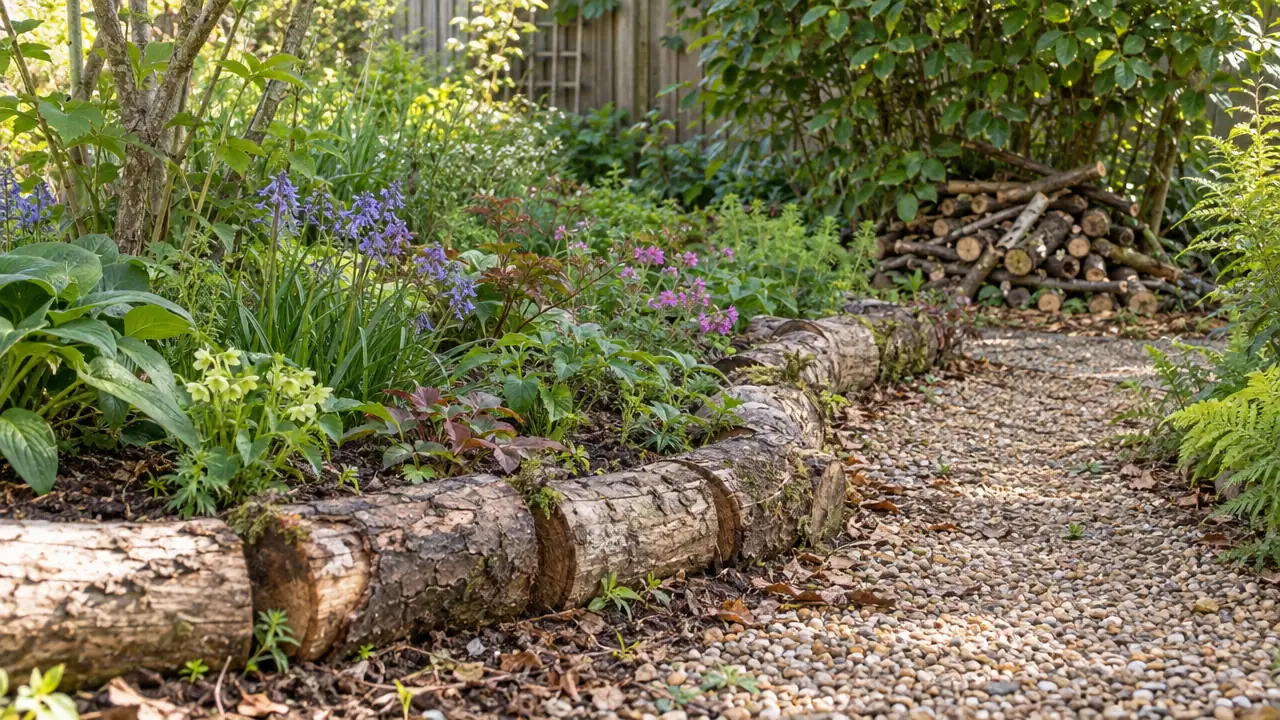
A neat log pile is a straightforward way to keep substantial lengths of timber. Little suggests shaping a pile into a curve or another deliberate form instead of treating it only as something to hide. Logs can also edge a border, standing upright or resting on their sides. In either position, they mark the line of the planting while remaining available as decaying habitat.
Smaller material has its own uses. Many gardeners leave autumn leaves on borders, where they cover the soil, provide shelter and eventually break down. Little suggests piling hedge clippings and twiggy prunings at the base of a hedge. They might instead go behind a shrub or into a corner. At Great Dixter, neatly arranged piles show that retained cuttings can even be a visible part of a garden’s design.
These options do different jobs. Leaves spread over a border form a covering; a heap of twigs creates gaps and a place for material to decay; a line of logs gives a border a firmer outline. Thinking about the shape and size of the cuttings helps determine whether to leave them where they fall, gather them into a pile or use them as a structural element.
Consider standing timber separately from a dead tree
An upright piece of dead wood can become a focal point as well as habitat. Little suggests digging a hole and setting a sufficiently substantial piece of timber upright where its position suits the design. This lets a gardener choose a location rather than waiting for an existing tree to die. It is a different decision from leaving a dead tree standing in its original place.
If a tree does die, leaving it or part of its trunk in the ground could allow it to decay naturally. Safety must be considered before choosing that option: seek advice from a qualified tree surgeon or arborist about retaining a dead tree. A rooted stump may also have a design use. At Kingham Lodge, Christopher Stockwell leaves tree stumps in place as stands for sculptures.
Compost some cuttings and use others elsewhere
Leaves, grass clippings, garden prunings and small twigs are among the materials that can go into a compost bin. After breaking down, they can be returned to the soil. Little regards a compost bin or heap as habitat in its own right, not simply a way to make soil improver. Piling suitable garden clippings is the basis of composting; managing the pile can make the process faster.
That does not mean every kind of garden waste belongs in the bin. Nor should a household bin be expected to supply all the compost a garden needs. Organic matter can contribute in other places too: leaves can decay on beds, and woody pieces can remain as habitat. Combining these uses with composting may reduce the need for additional compost, although the amount will depend on the garden.
The destination can follow the material. Small cuttings can go to the compost heap; longer, twiggy pieces may be more useful as a pile or woven edge. A substantial log can remain intact beside a bed. This avoids chopping everything into one form merely to clear it away, while keeping the distinction between material intended for compost and material retained for structure or shelter.
Weave a dead hedge
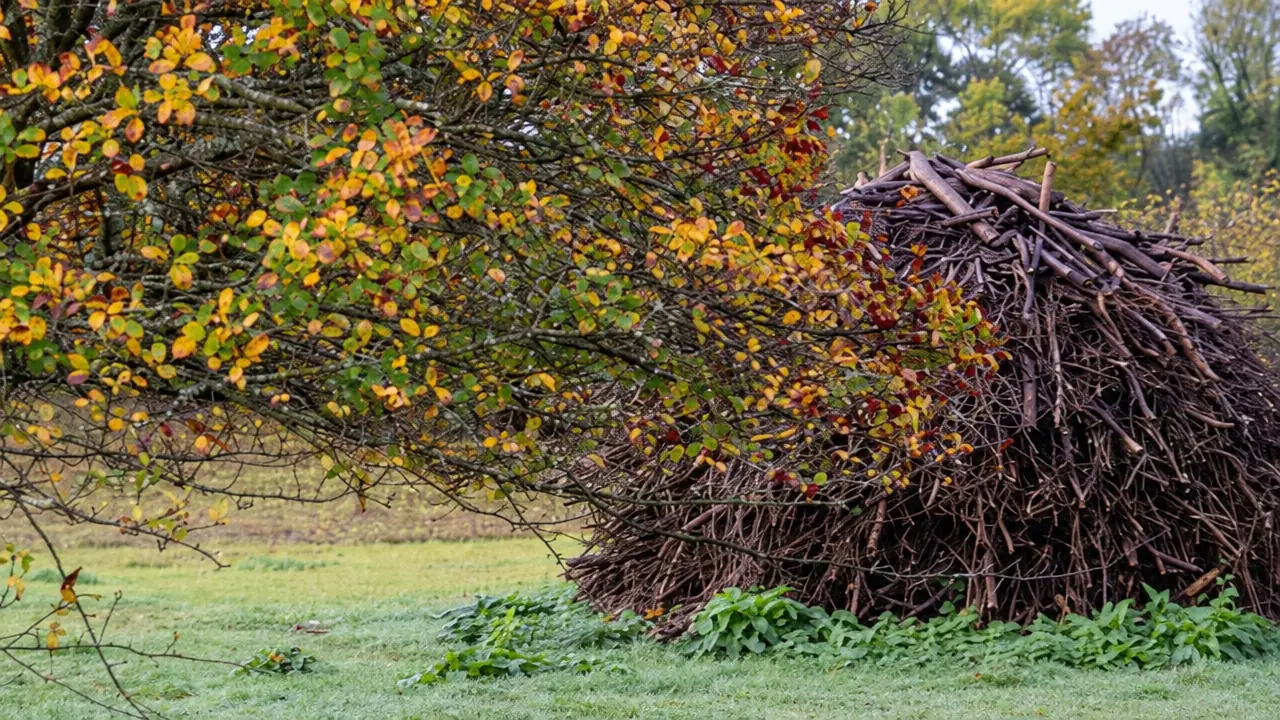
Longer prunings can be woven between upright posts to make a dead hedge. Unlike a growing hedge, it is a fence formed from cut branches and twigs. It can be waist-high or taller, though lower versions are also used as edging. The posts establish a defined line, the woven material provides a backdrop to planting, and spaces within it can offer habitat.
A low dead hedge can organise the edge of a border; a taller one makes a more conspicuous division. Either makes use of lengths that might otherwise be cut smaller for disposal or composting. Because the branches are gathered into a deliberate structure, retaining them need not mean leaving a loose heap wherever the pruning took place.
Keep some winter stems after cutting back
Seedheads and grasses left standing through winter can protect soil, shelter overwintering insects and add visual interest in frost. By spring, the old growth may be breaking down or need cutting back. Sending all of it straight to compost can disturb insects still sheltering in stems. It may also remove seedheads and grasses that could provide birds with food or nesting material.
Little suggests fastening some cut material around a stake in a border, turning the cleared growth into a compact feature. At the Horniman Museum & Gardens, head of horticulture Errol Fernandes cuts back dead grasses and seedheads in March and ties them to hazel stakes. Insects such as ladybirds can remain in the stems until they emerge, while the grasses can supply nesting material for birds.
This offers a middle course between leaving every old stem standing and clearing the whole border into a heap. The material can be moved when the planting needs attention without immediately removing its potential habitat value. It also gives cuttings a place in the border’s spring appearance while newer growth develops.
Find uses for paving and rubble
Hard landscaping deserves the same assessment as garden cuttings. An established plot may hold slabs, bricks and stones from previous layouts, while construction work can leave concrete and rubble. Arranged pieces can add shape to a garden, and crevices between them may provide shelter. Little’s point is that the gaps can matter to wildlife whether the pieces around them are natural stone or concrete.
Consider a possible use before arranging for removal. A single leftover fragment need not be decorative on its own to become useful in an edge or larger feature. Equally, retaining a heap without a plan is not the same as incorporating it into a design. The location and intended purpose help determine how much material is worth keeping.
Contain rubble or make a wall
Little suggests a small gabion cage as one place to accumulate rubble. It could serve as a retaining feature or backdrop to planting. He has seen the visible face stacked carefully to resemble a dry-stone wall, with less attractive pieces placed behind it. Such an arrangement stores leftover material on site, creates a defined garden element and leaves gaps that can act as habitat.
A wall in Little’s garden illustrates the difference between reusing cheap material and completing a cheap project. A skilled dry-stone waller made it from demolition waste. The builders’ waste cost around £30, while the walling cost around £1,400. Those are indicative figures for that particular job, not current quotes for another garden. Skilled labour can be the larger part of a reuse budget.
That distinction matters when planning work. If the design calls for a constructed feature but the necessary skills are not available at home, retaining the material will not remove the cost of building it. Deciding on the proposed feature before demolition waste is taken away lets the material and labour costs be considered together. The result may still be worthwhile as a garden feature, but reuse alone is not a promise of savings.
Set old slabs vertically for planting
Old pavers need not be laid flat again. Little suggests setting them vertically, with soil between them, taking inspiration from stone crevice gardens. Plants suited to growing between rocks can occupy the gaps. The slabs do not have to be natural stone: concrete can also be used. The planting principles are those of a rock garden, with the spaces between the pieces providing the growing positions.
A fence already being planned presents another chance to give a built feature more than one function. Little suggests making some fence posts into bee posts. This would need discussing with the fencing contractor and could add a labour charge. It is an option to consider within an existing project, not a reason to replace a sound fence solely to add habitat.
Use topsoil to vary growing conditions
A garden does not necessarily need the same depth or fertility of soil everywhere. Little suggests moving topsoil from one area to another so that one part gains a deeper layer while another becomes less fertile. Those contrasting conditions can support different planting. Displaced topsoil from building or landscaping work may therefore have a use on site rather than automatically becoming material to pay to remove.
Chalk is his example: a deeper layer of topsoil could support more demanding garden plants in one area, while exposed chalk elsewhere could suit wildflowers adapted to poor soil. This also explains the interest in sand, gravel and aggregate gardens. The purpose is variation in growing conditions, not a blanket instruction to cover fertile ground. What makes sense depends on the material beneath the topsoil and the planting intended.
Deciding where any moved soil should go is most useful before its removal is scheduled. An area with less topsoil need not be treated as a defect if it has been chosen for plants suited to leaner conditions. Likewise, extra depth can be directed where it will serve the planned planting. The contrast should be intentional rather than the accidental result of shifting a pile out of the way.
Spread smaller habitats around the garden
Little questions the emphasis on one very large bee or insect hotel. He favours several smaller habitats in different parts of a garden: log piles in sun and shade, for instance, or retained material in a forgotten corner. His own garden includes green roofs on his house and sheds, as well as hollow stems tucked into a breeze block. These examples show how habitat can be distributed rather than concentrated in one structure.
Retaining habitat can conflict with advice to keep gardens tidy so that slugs, snails and other pests have less shelter. There is also concern that some insect habitats may attract parasitic wasps that eat bee larvae. Little regards these animals as part of wider ecological relationships: slugs and snails can feed birds, and parasites are linked to their prey. Providing habitat does not require pretending that every visitor is welcome to every gardener.
The practical choice is selective. A garden might keep a useful stump, compost suitable small cuttings, weave longer branches into an edge and give old paving a planting role without retaining everything it produces. Identifying a place, a purpose and any labour or ongoing care involved makes reuse a considered part of garden planning rather than simply postponing a clear-out.